

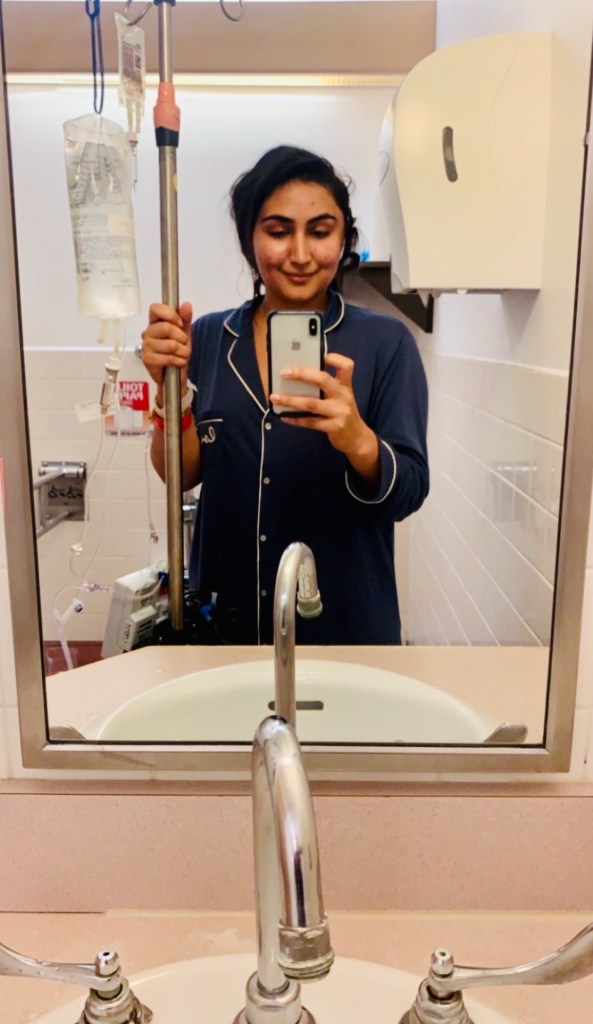
It all began October 8th, 2018. I had gone for dinner the night before. I woke up feeling sick to my stomach with my head pounding: the classic food poisoning picture, nothing major to stress over. I skipped school that day, deciding to take it easy, indulging in fizzy drinks and relying heavily on Gravol (the friendly Canadian anti-nauseate). The next morning I was awoken by the ferocity of my headache. It felt like someone had fastened a band around my head and continued to tighten it. It was both nauseating and suffocating. Probably just the food poisoning, I thought, I’ll get over this, I’m a tough cookie. You see, in my family I’m known for my high pain tolerance. I laser my Brazilian for goodness sake, I can deal with this pain. I suffered through the day, took over the counter medications that did nothing to ease the pain and lied in a dark room, willing for this to end and vowing never to go to that restaurant again. I was only five weeks into my first year of medical school, I did NOT have time for this nuisance.
I woke up Wednesday morning feeling worse than ever and broke down sobbing in my bathroom. I had never had a headache of this intensity and never felt worse. I positioned myself over the toilet bowl as I threw up from the pain. I dragged myself into the shower, sat on the floor and allowed the water to engulf me, hoping this would somehow ease the pain. Having not made the slightest difference, I hastily dialled the number for our school’s walk-in clinic and bawled on the phone to the receptionist. She quickly freed up time for the following morning so that I could be seen as soon as possible. I could hear the concern in her voice as she urged me to head to the A&E (Accident & Emergency, the Irish term for the Emergency Department) should my symptoms worsen overnight. I graciously thanked her for pulling strings on my behalf and told myself I can wait until tomorrow, this can’t be anything scary. Although the concern in her voice worried me, I forced myself to try and sleep. I showed up to the doctor’s office bright and early, armed with all the medications I had been using to try to ease the pain. He was very nice. We made small chat about the woes of medical school and my adjustment to Irish life. After his assessment, he was sure I was suffering from migraines. He prescribed me some heavier pain killers and assured me this would get better in a few days and if not, to come in after the weekend. I took his word for it, as physicians tend to have the utmost trust of their patients.
By the time Sunday morning rolled around, I thought I had beat it, as I felt the best I had all week. I went for brunch with a friend at a beautiful but bright spot in Dublin. She watched as my cheerful demeanour quickly changed. The brightly lit café brought my headache back with a vengeance. Ugh, I thought this was over. It’s ok, I will just wrap a scarf around my head nice and tightly (the Indian solution to headaches) and lie in the dark. I am SURE this will be gone by tomorrow. I have a tendency to be extremely positive. The next morning I genuinely felt better. After a full week of school missed, I was eager to get back to classes. On my twenty minute walk to school, I felt a sharp pain in the upper region of my abdomen. It was all-consuming. I sat in class for a mere ten minutes before getting up and barging into the admin’s office with tears streaming down my face. Not only was there a very sharp pain in my stomach, my head was pounding and I felt like I had no control over my body in that moment. As a normally very composed individual, I couldn’t believe I was ugly crying in front of my course coordinator and administrative assistant. Luckily, he was a physician and he quickly assessed me, called down to the A&E and arranged a cab to the emergency department. My friends worriedly waited with me, forming a protective shield to hide my tear-strewn face from prying eyes. They all offered to come as the cab pulled up, but I declined, not wanting anyone to miss classes and knowing that we had an anatomy lab card signing (oral quiz) that day. I contemplated telling my family. All this while I hadn’t uttered a word. With my family in Western Canada, I didn’t want to stress anyone out for something that was probably nothing. And my sister had just had a baby two weeks earlier, her need for my parents was greater than mine. I’m keeping this to myself. I can handle this. I’m an adult.
I got to the A&E at 10AM to see a full waiting room of patients. Oh boy, I thought, this is going to be a while. I anxiously sat in the hard plastic black chairs and awaited to be called. I scanned the waiting room, mentally triaging patients and noting their support systems. To say it was a lonely moment would be an understatement. Over an hour had passed before I heard “Millie Mohan” being called by a young looking Irish doctor. I gingerly followed him and reciprocated his small talk: yes I’m a first year medical student at RCSI, from Canada, had a hard time getting in back home and decided to take a leap of faith, yes I love Dublin, people are super friendly, weather isn’t that different, med school is very challenging and yes I love it. I appreciated his effort to get to know me. I felt at ease in his presence. He took me into a room and I hopped onto the patient chair as he begun taking my history. I took mental notes while I watched him conduct his physical exams: GI, upper and lower limb neuro, cardiovascular. All exams I had recently learned myself or knew were coming in the upcoming semester. I didn’t imagine being on the flip side so soon after learning them. After finishing his examinations, he found me a chair inside the department as they didn’t have any beds available. “The Irish healthcare system is always swamped” he explained. He brought me some pain medications for the headache.
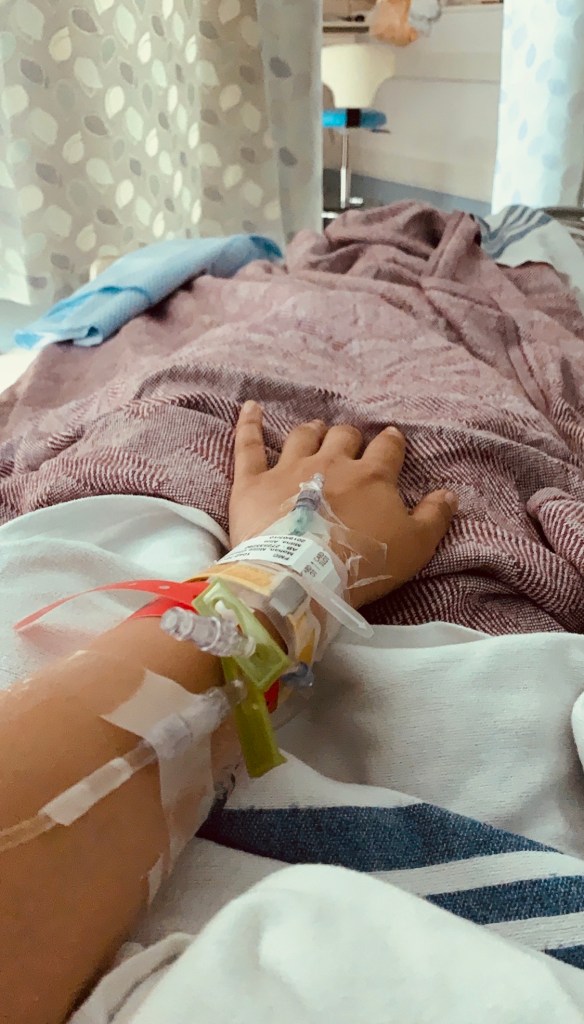
I looked down at my phone: 1:30pm. I was eager to leave. Just as that thought crossed my mind, I was hit by a crippling pain in my stomach that forced me to keel over in my seat, shrieking in pain. The doctor rushed over. I can’t quite remember what happened next. I know I was started on an IV line and given fluids. They took my blood and gave me medication. I finally decided it was time to call my brother-in-law, an Emergency Physician in British Columbia. I sobbed over the phone, unable to control my emotions. He asked to speak to the physician to find out what was going on, because I was essentially incomprehensible. The texts from my sisters started pouring in and I took a sigh of relief. Even though I felt selfish for caving and worrying them, I was glad they knew because I couldn’t handle this alone any longer.
Over the next hour or so the stomach pain ebbed and flowed, but mostly disappeared. “It seems the acute epigastric pain you were having was a build-up of gas, it can be very uncomfortable” the doc said. I resisted the urge to roll my eyes…you’re telling me. Once the stomach pain subsided, my focus was redirected to my unrelenting headache. My doc arranged for a contrast CT head (brain scan). A porter arrived with a wheelchair, ready to wheel me off to radiology for my scan. I hopped off the wheelchair and laid down on the machine’s ice cold table. The tech informed me that the contrast would feel very odd, as if my insides were heating up, but this shouldn’t last for more than a minute. She injected the contrast and surely enough, I felt like my veins were on fire. How odd indeed. But it dissipated as quickly as it came on. The CT was quick and for this I was grateful. I was brought back to my hard plastic chair: joy. I watched the healthcare professionals whiz around the department like chickens with their heads cut off. So many people to attend to, so little time. My doc popped in whenever he could to update me: still waiting for the results of the scan, how is your headache, do you need any pain meds? I was grateful when a lady came by with tea and a sad excuse for a ham sandwich. It was 4pm and I hadn’t eaten anything all day. By 530pm, I was pretty miserable. I’d been sitting alone in a chair for the better part of 8 hours with no indication of when I could leave AND to top it off, my headache wasn’t getting any better.
By 6pm I finally flagged down a nurse who was familiar with my case. She told me I would have to stay overnight as they found something on my CT (my stomach dropped), but the doctor will be back soon to discuss in detail. Filled with dread, I hastily dialled my brother-in-law’s (BIL from here on in) number and filled him in on the latest update. Luckily, my doc came bustling down the hallway soon after and saw the worried look on my face. I put my BIL on speaker while the doc told me what they found on my CT: an arterio-venous malformation (AVM). Normally, arteries and veins have a capillary bed between them. I was missing this capillary bed which meant the high pressure artery in question was directly connected to an easily distensible vein. Essentially, this tangle of blood vessels can dilate and is prone to rupture (more on this in my next post).
They weren’t sure if it was the cause of my headaches or an incidental finding, but they would have to see this through regardless. What this meant for me? Hospital admission: a few days in hospital while they arranged an MRI (cue pre-emptive claustrophobia) to get further information. I was so frustrated at this point. This finding did not give me any clarity; if anything it launched my brain into a dark overdrive of what ifs and whys. All I wanted to do was go home and take a shower. I wanted to hug my parents. My sisters decided to tell my parents, as this was more serious than any of us had thought. As expected, my parents were beside themselves with worry. They couldn’t believe I decided to suffer in silence. During our twenty minute phone call, my parents hurriedly booked the next flight out to Dublin. They would reach the following afternoon. I was so incredibly relieved and wished I had reached out for help sooner… but hindsight is always 20/20 hey? I spent the remainder of the evening and night in a hard wooden chair, in the same room I had spent all day in. I was given a blanket and told that I would be escorted to my bed as soon as it became available. The hours dragged on and on. I maxed out my nearly unlimited monthly data watching non-stop Netflix. I looked around to see my fellow patients of all walks of life, each person looking equally as miserable and uncomfortable. I was the youngest there by a long shot. With the chaos of the department, I was even mistaken as a patient’s family member a few times.
Finally, at 530am the next morning my porter arrived to take me to my unit: St. James. I clumsily clamoured into the wheelchair, feeling like a tonne of bricks, my body so stiff from the hours of sitting still. I felt a weird sense of dread but also relief as we arrived at this dimly lit unit. My bed was beside the window in a six person room. I was among strangers once again and boy did I feel uncomfortable. But my utter exhaustion overpowered my anxiety and I fell asleep almost immediately after getting into the cold bed and pulling the lacklustre thin sheets up to my chin. Peaceful sleep in hospital doesn’t exist though. I was awoken at least every hour by nurses, phlebotomists, students, residents, physicians. I never realize how little sleep patients get in hospital, which is interesting given how important sleep is for recovery.
It’s funny, I have a much fuzzier memory of what happened after admission in hospital. I needed a family member to be on the phone for every conversation I had with a physician. It all went over my head, as if I just went numb every time they visited, and blank once they left. Everything was overwhelming: the daunting blur of white coats, the air of knowledge and sometimes superiority, the medical jargon, the sheer number of people trying to clamour around the bed before the curtains are drawn during rounds, the anxious-looking medical students and sweaty residents, the lead consultant towering over my sweats clad body in bed. I wondered if this was how all patients felt, especially those not within the healthcare sphere. I couldn’t believe this is how it felt to be a patient. I’ve been on the other side of this interaction, and now I felt incredibly guilty for having done some of the same things. I wanted to scream at the medical students and residents to let me have some space. I wanted them to look up from their ferocious notebook scribbling and see the terrified person in front of them, to treat me like a human, not an examination. I wasn’t expecting much, just a smile, a knowing nod, a pat of the shoulder or hand, an assurance that they will be around if I needed anything. The whole interaction was eye-opening for me, to say the least.
Luckily, the consultant was great. He had fantastic bedside manner. Every time he came around, he sat on my bed and made light-hearted conversation. He was able to read my body language and facial expressions. He happily answered the many questions my parents had and broke down complex concepts into easily digestible pieces. He did not leave until we understood everything he was saying. I mentally took note of his mannerisms so that I could model this positive behaviour with my own future patients. It’s less the knowledge that impressed me, but the human interaction that is easy to forget when you are swamped as a healthcare professional. The few extra minutes it takes to acknowledge your patient’s feelings and normalize them can make such a huge impact on the patient’s ability to cope. Don’t leave without a conclusion, let them know what is going to happen next, and when they will see you next. “We will get working on x and see you tomorrow okay. Let x know if you are having any issues”. Seems so simple, right? Yet it astounds me how many people don’t take the time for these simple things. What do you think patients remember, intellect or caring bedside manner?
The days I spent in hospital seem to blur together now. I tried my best to keep on top of classes, but reading launched me into a frenzy of headaches. I felt stress about missing school and stress about the uncertainty of this hospital stay. Was I going to be discharged soon? Was I getting transferred to Beaumont hospital? Is this AVM an urgent matter? What is causing my headaches? I was discharged on a Friday after five full days in hospital. I still had a headache but I was relieved to get out of that place. Oddly enough, within hours of being discharged, my tension-like headache became increasingly migranous in nature. I suddenly developed severe photophobia, had intense nausea and was rendered useless on the couch of our Airbnb. How did this become so much worse after leaving hospital? I could not bear the pain. I wanted to die, I couldn’t continue on this way. I spent the better part of four full days in the dark while we tried to contact my neurologist from the Mater. We tried acupuncture and massage therapy. While it helped in the short term, the migraine and nausea would hit me like a truck within an hour or two. Wednesday morning, I arrived to the Migraine clinic for an appointment graciously scheduled by my neurologist, who was surprised to hear how much I had deteriorated. I must have looked rough because everyone was concerned. I saw one of my neurologist’s colleagues and recounted my long winded story of suffering over the past few weeks. She listened to every detail, answered all my questions and spent almost an entire hour with me. She recommended an occipital nerve block. I saw her prep the massive needle and felt a shudder. It was very painful. She would give me a break every few seconds. My dad couldn’t even look, he had to turn away. I felt a massive lump the size of a golf ball at the injection site. It stung intensely.
But it was uphill from here. With every passing day I felt better. By Sunday, I felt the best I had in weeks. God bless nerve blocks and modern medicine. I was finally feeling like myself again, after six long weeks of what felt like torture. I still didn’t have an answer as to what spurred this episode of headaches, but I was just relieved it was over. But wait, what about the AVM, you might be thinking? Now that is for another post. The story continues, so stay tuned!

 SINCERELY MILLIE
Millie I loved reading this so much! One tough cookie is exactly what you are! Loved hearing about your experience being a patient and your perspective of your admission. I will definitely think of you when I’m working with patients in my practice as well! Can’t wait to read part 2 ❤️
LikeLike